

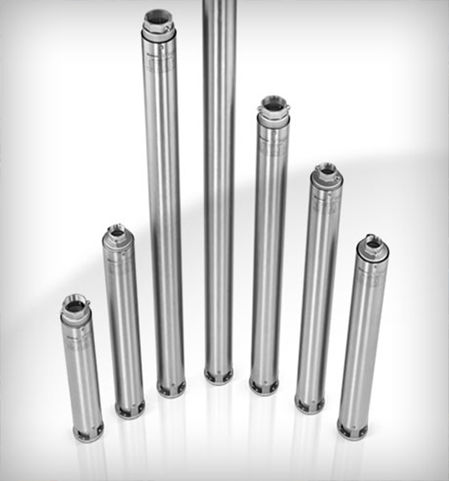
A submersible pump is a pumping system designed to transfer water or liquids with different properties from one location to another while operating completely or largely submerged in the liquid. It is widely used in applications such as extracting water from deep wells, agricultural irrigation, drinking and domestic water supply, industrial water transfer, and various infrastructure projects. Operating directly within the liquid gives submersible pumps a different operating configuration from conventional surface pumps. This characteristic enables effective and reliable solutions, particularly in applications involving significant depths.
Today, submersible pumping systems are no longer regarded solely as equipment used to bring water to the surface. A properly selected submersible pump plays an important role in improving system efficiency, controlling energy consumption, ensuring an uninterrupted water supply, and increasing operational reliability. Therefore, submersible pump selection should consider not only pump power but also the conditions of the application, required flow rate, head, and overall system configuration.
Understanding submersible pumps is the first step toward designing the right system.
A technical guide covering operating principles, applications, selection criteria, and maintenance requirements on a single page.
Water supply and transfer applications
The correct operating point
Groundwater and well water applications.
A compatible hydraulic and mechanical system.
Flow rate, head, and well conditions are evaluated together.
How Does a Submersible Pump Work?
The basic operating principle of a submersible pump involves drawing liquid from its surrounding environment and delivering it upward or to the required destination under pressure. Mechanical energy supplied by an electric motor is transferred to the impellers inside the pump. As the impellers rotate, they increase the energy of the liquid and direct the water through the pump discharge into the piping system. In multistage submersible pumps, this process continues through multiple stages, helping achieve higher heads.
Operating while submerged in liquid provides a significant advantage, particularly in terms of suction. While conventional surface pumps require a suction line to bring water to the pump, submersible pumps operate directly within the liquid. Depending on the application, this can provide more consistent and reliable operation. However, proper installation, suitable electrical connections, correct motor selection, and compliance with the manufacturer's specified operating conditions are essential for reliable system performance.
Where Are Submersible Pumps Used?
One of the primary applications of submersible pumps is extracting water from underground water sources. Submersible pumps with different capacities and dimensions can be used to bring water to the surface from deep wells, drilled boreholes, and various water sources. Their broad range of applications, from municipal water supply systems to individual water requirements, highlights their importance in water technologies.
Agricultural irrigation is another major application area for submersible pumps. Extracting water from wells and transferring it to irrigation systems is critical for sustainable agricultural production. Submersible pumping solutions are also used in industrial facilities, building systems, water storage systems, and various infrastructure projects. As applications change, the required flow rate, head, motor power, and pump specifications also vary.
What Are the Main Advantages of Submersible Pumps?
One of the most important advantages of submersible pumps is their ability to transfer water reliably, particularly from deep wells. Because the pump operates within the water, certain problems associated with long suction lines can be eliminated. The ability to create a compact pumping system also offers significant advantages in terms of installation and operation. When the appropriate product is selected, systems can be designed to meet different flow rate and head requirements.
Another significant advantage is the wide range of available products. Submersible pumps designed for different well diameters, operating points, and application requirements allow solutions to be developed that more closely match system needs. The key is not to select the pump with the highest power rating but to determine the correct operating point. An oversized or undersized pump can negatively affect system performance and energy consumption.
What Should Be Considered When Selecting a Submersible Pump?
One of the first criteria to evaluate when selecting a submersible pump is the required amount of water. The system's water demand over a specific period must be determined to establish the necessary flow rate. Next, the required head is calculated by evaluating the elevation from which the water must be transferred to its intended destination. The piping system, fittings, and potential losses within the system can also affect the total head the pump must provide.
Well diameter, water level, piping configuration, physical properties of the water, and electrical infrastructure must also be considered during the selection process. Particularly in wells, sand and other particles can affect pump components over time, making it important to evaluate the operating environment. Professional pump selection involves more than choosing a particular product from a catalog; it requires a comprehensive assessment of the entire system.
Why Is Pump and Motor Compatibility Important?
In submersible pumping systems, the pump and motor are two essential components that complement each other. While the pump performs the hydraulic function, the motor supplies the mechanical power required by the system. Therefore, selecting a motor that is not compatible with the pump's operating conditions may cause performance problems, unnecessary energy consumption, or a reduction in equipment service life.
When selecting a motor, the pump's power requirements, electrical supply conditions, operating duration, and system operating characteristics must be evaluated. Properly matching the dimensions and capacities of the pump and motor helps ensure more balanced system operation. Particularly in applications requiring continuous operation over extended periods, the correct pump-motor combination is important for both operational reliability and sustainable performance.
The Importance of Maintenance in Submersible Pumps
As with any mechanical system, regular inspection and maintenance are important for submersible pumps. Changes in pump performance, reductions in water flow rate, variations in electricity consumption, or unusual operating conditions may indicate that the system requires inspection. Early identification of problems helps prevent more serious failures and unplanned downtime.
Maintenance activities should be planned according to operating conditions and manufacturer recommendations. Particularly in heavily used systems, electrical connections, pump performance, motor operating parameters, and the general condition of the piping system should be inspected periodically. Regular maintenance is important not only for protecting the equipment but also for ensuring that the system continues to deliver the required water under appropriate conditions.
Why Is Choosing the Right Submersible Pump Important?
The success of a water supply system often begins with selecting the right pump. Using a pump with unnecessarily high capacity does not always result in better performance. Likewise, a pump with insufficient capacity may fail to deliver the flow rate and pressure required by the system. The ideal solution is to determine the actual operating conditions and select a pump that matches those requirements.
Correctly evaluating the technical data involved in submersible pump selection may initially appear complicated. However, accurately defining system requirements simplifies much of the process. When flow rate, head, well configuration, and operating conditions are evaluated together, it becomes possible to create a durable, efficient, and reliable pumping system. This approach is important both for protecting the investment and ensuring more effective use of water resources.


Do Comment