

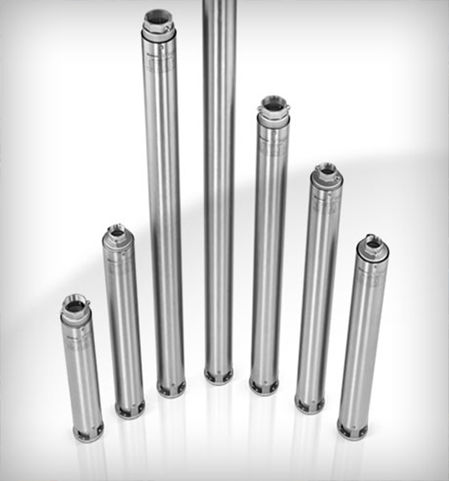
A submersible motor is an electric motor designed to operate submerged in water or another suitable liquid, primarily providing the mechanical energy required to drive submersible pumps. Submersible motors are widely used in applications ranging from deep wells and agricultural irrigation to drinking and domestic water systems and industrial water supply. Their most important characteristic is that, unlike conventional surface-mounted motors, they are specifically designed to operate in liquid environments. This allows the pump and motor to form a compact, integrated system, particularly in deep well applications.
At first glance, selecting a submersible motor may appear to be a simple process based solely on motor power. However, a successful system requires a comprehensive evaluation of the pump's power requirements, well conditions, electrical infrastructure, operating duration, cooling requirements, and overall application characteristics. A properly selected submersible motor contributes to reliable system operation, while an incorrect selection may result in reduced performance and increased operating costs.
Power and operating point
Operating environment and flow
Protection and power supply infrastructure
How Does a Submersible Motor Work?
The primary function of a submersible motor is to convert electrical energy into mechanical energy to drive the pump. Electrical energy is converted into rotational motion through the motor's electromagnetic components, and this motion is transferred from the motor shaft to the pump shaft. As the pump impellers rotate, energy is transferred to the water, allowing the liquid to move through the system toward the required destination.
Although this operating principle is fundamentally similar to that of surface-mounted electric motors, submersible motors operate in a significantly different environment. Since the motor is located underwater, its housing, sealing systems, bearings, and electrical connections must be designed for these conditions. Proper cooling during operation is also essential. Therefore, not only the motor's electrical power but also the conditions of its installation environment must be considered.
Where Are Submersible Motors Used?
One of the most common applications of submersible motors is in deep well pumps. In applications where groundwater must be brought to the surface, the pump and motor are lowered into the well and operated together. Agricultural irrigation systems, municipal water supply, drinking and domestic water applications, and various industrial facilities are among their primary areas of use.
Submersible motors are not limited to large systems requiring substantial volumes of water. Motors available in different power ratings and dimensions can also be used in smaller-scale water supply applications. The essential consideration is not the size of the motor but its compatibility with the pump and operating conditions. Since each application has different flow rate, head, and operating duration requirements, motor selection must be adapted accordingly.
Why Is Compatibility Between the Pump and Submersible Motor Important?
The pump and motor are the two fundamental components of a submersible pumping system and should not be considered independently. The motor supplies the mechanical power required for the pump to operate at a specified flow rate and head. If the motor cannot provide the power required by the pump, the system may fail to achieve the desired performance.
Conversely, using an unnecessarily oversized motor does not always provide an advantage. It may increase investment costs and lead to unnecessary oversizing of system components. The correct approach is to determine the pump's power requirements at its operating point and select a motor that meets those requirements. This allows the system to operate in a more balanced and reliable manner.
What Should Be Considered When Selecting a Submersible Motor?
The first step in selecting a submersible motor is accurately determining the characteristics of the pump to be used. The pump's flow rate, head, number of stages, and power requirements at the operating point play a decisive role in motor selection. The supply voltage, phase configuration, and control method of the electrical system must also be evaluated.
Well diameter and the physical dimensions of the motor are also important selection criteria. The motor must be properly positioned within the well, and water flow around it must be suitable for the required operating conditions. Factors such as daily operating hours, the number of motor starts and stops, and ambient temperature should also be considered for long-term performance.
Why Are Cooling and Operating Conditions Important?
Electric motors generate heat during operation, and this heat must be adequately dissipated. In submersible motors, the surrounding water can help maintain the motor's operating temperature within an acceptable range. However, sufficient water movement around the motor and installation in accordance with the manufacturer's recommendations are essential for effective cooling.
Particularly in large-diameter wells or different installation configurations, flow conditions around the motor may vary. Insufficient cooling can negatively affect the operating conditions and durability of motor components over time. Therefore, selecting a submersible motor should not be limited to comparing power ratings; mechanical positioning and cooling requirements must also be evaluated.
Electrical Infrastructure and Protection Systems
Proper electrical infrastructure is essential for the reliable operation of a submersible motor. Selecting the correct cable cross-section according to the motor's power rating, designing a suitable control panel, and providing the necessary electrical protection are important aspects of the system. Voltage fluctuations, phase loss, and overcurrent conditions can affect motor operation.
The purpose of protective equipment is not only to prevent motor failure. When abnormal conditions occur within the system, these devices help prevent more serious problems by shutting down the motor at the appropriate time. Therefore, even a high-quality submersible motor cannot be expected to deliver the desired performance when connected to inadequate electrical infrastructure. The entire system must be evaluated together.
Maintenance and Inspection of Submersible Motors
Since submersible motors generally operate inside wells that are difficult to access, regular inspection becomes even more important. Changes in electrical current, reductions in pump performance, or unusual system behavior may indicate potential problems requiring inspection of the motor and pump assembly.
The maintenance plan should be developed according to the motor's operating duration, application conditions, and manufacturer recommendations. Regular monitoring of electrical connections, control panels, cables, and system performance can help identify potential problems at an early stage. Well-planned maintenance not only reduces failures but also contributes to safe and reliable operation over many years.
The Importance of Choosing the Right Submersible Motor
The reliability of a submersible pumping system does not depend solely on the quality of the pump. A submersible motor that properly delivers the power required by the pump and is suitable for the operating environment is one of the fundamental elements of overall system performance. Therefore, selection should not be based on a single criterion such as price, power, or brand.
Proper motor selection requires a comprehensive evaluation of pump performance, well configuration, electrical infrastructure, and operating conditions. Accurate analysis at the initial stage can prevent many problems that might otherwise arise later. In systems where continuous operation is essential, such as water supply applications, this approach offers both technical and economic value.


Do Comment